 |


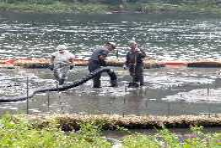
Employment of environmental technicians is
expected to grow much faster than the
average; these workers will be needed to
help regulate waste products; to collect air,
water, and soil samples for measuring
levels of pollutants; to monitor compliance
with environmental regulations; and to
clean up contaminated sites.
Occupational Health and Safety courses
such as: Hazwoper, Confined Space Entry,
Hazard Communication (8hr), and climbing
certification.
expected to grow much faster than the
average; these workers will be needed to
help regulate waste products; to collect air,
water, and soil samples for measuring
levels of pollutants; to monitor compliance
with environmental regulations; and to
clean up contaminated sites.
Occupational Health and Safety courses
such as: Hazwoper, Confined Space Entry,
Hazard Communication (8hr), and climbing
certification.
Environmental field technician performs various
environmental sampling activities including:
Supervising environmental construction
projects, site assessments, monitoring
activities and sampling, remediation
activities, Report writing, In addition to
assisting clients with regulatory compliance.
Individuals may work with vapor extraction,
ground water pump and treat, and
dual-phase recovery systems, amongst others.
Candidates with 40 Hour OSHA (29 CFR
1910.120) HAZWOPER health and safety
training are preferred, but many companies
will train the right person.
environmental sampling activities including:
Supervising environmental construction
projects, site assessments, monitoring
activities and sampling, remediation
activities, Report writing, In addition to
assisting clients with regulatory compliance.
Individuals may work with vapor extraction,
ground water pump and treat, and
dual-phase recovery systems, amongst others.
Candidates with 40 Hour OSHA (29 CFR
1910.120) HAZWOPER health and safety
training are preferred, but many companies
will train the right person.
Entry-level candidates who possess the
appropriate background are considered.
Successful candidates will be responsible,
mechanically inclined, self-motivated people. Any
previous experience in site investigation,
remediation, construction or other outdoor
fieldwork is advantageous.
appropriate background are considered.
Successful candidates will be responsible,
mechanically inclined, self-motivated people. Any
previous experience in site investigation,
remediation, construction or other outdoor
fieldwork is advantageous.
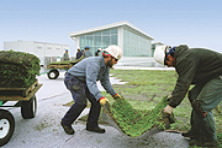
Forest and conservation technicians compile data on
the size, content, and condition of forest land.
These workers usually work in a forest under the
supervision of a forester, doing specific tasks
such as measuring timber, supervising harvesting
operations, assisting in road building
operations, and locating property lines and
features.
They also may gather basic information, such as
data on populations of trees, disease and insect
damage, tree seedling mortality, and conditions
that may pose a fire hazard. In addition, forest
and conservation technicians train and lead
forest and conservation workers in seasonal
activities, such as planting tree seedlings, and
maintaining recreational facilities.
Increasing numbers of forest and conservation
technicians work in urban forestry—the study of
individual trees in cities and other non-
traditional specialties, rather than in forests or
rural areas.
the size, content, and condition of forest land.
These workers usually work in a forest under the
supervision of a forester, doing specific tasks
such as measuring timber, supervising harvesting
operations, assisting in road building
operations, and locating property lines and
features.
They also may gather basic information, such as
data on populations of trees, disease and insect
damage, tree seedling mortality, and conditions
that may pose a fire hazard. In addition, forest
and conservation technicians train and lead
forest and conservation workers in seasonal
activities, such as planting tree seedlings, and
maintaining recreational facilities.
Increasing numbers of forest and conservation
technicians work in urban forestry—the study of
individual trees in cities and other non-
traditional specialties, rather than in forests or
rural areas.

Environmental Field Technicians
Cedar Valley Community College (On-line)
The Energy Efficient Green Building Institute at
Cedar Valley College is in its first year of offering
training and education in the green building
field. Students new to the building sciences as
well as students with experience in related fields
receive training based on distance learning
strategies, as well as other strategies, leading to
a variety of certifications and two-year degrees.
Green Building Certification Institute
The Green Building Certification Institute (GBCI)
was established as a separately incorporated
entity with the support of the U.S. Green Building
Council. GBCI administers credentialing programs
related to green building practice. These
programs support the application of proven
strategies for increasing and measuring the
performance of buildings and communities as
defined by industry systems such as the
Leadership in Energy and Environmental Design
(LEED®) Green Building Rating Systems™.
 |  |  |  |  |  |


Greenroof Install at Ford Motors
Forest Technicians


earth: "mother dirt" e'-nah-wah'-dut
The Green Advantage
Green Certification Available for
Building-Related Practitioners Today's
environmentally conscious client prefers
durable and disaster resistant, healthier and
environmentally friendly. Green Advantage®
certifies your knowledge of the latest in "green"
building practices, technologies and techniques.
Green Certification Available for
Building-Related Practitioners Today's
environmentally conscious client prefers
durable and disaster resistant, healthier and
environmentally friendly. Green Advantage®
certifies your knowledge of the latest in "green"
building practices, technologies and techniques.
through the Department of Labor. Contact your local Workforce office for more training information or contact us for help info@nativeworkplace.com
