

Cable Installer 1
What are the hours and working conditions?
Your normal working week as a telecommunications technician, will be 9am to 5pm, Monday to Friday.
You might have on-call duties, including evenings and weekends, depending on your employer.
Your work may take place indoors on production lines and on customers' premises, and outdoors on a site.
Some installation, maintenance and repair work will involve working at heights.
What skills and knowledge will I need?
To be a telecommunications technician, you will need:
· a methodical approach to work and the ability to pay attention to detail
· good problem-solving skills
· an aptitude for technical and practical work
· good communication skills with the ability to explain technical matters in clear terms
· the ability to read technical drawings, cabling plans and circuit diagrams
· a willingness to keep up to date with new developments in technology
· good customer care skills
· the ability to work alone or as part of a team
· a reasonable level of fitness and normal colour vision
· a knowledge of health and safety issues.
Technicians employed in the telecommunications industry and demand is increasing for qualified staff. You can work for a variety of organisations such as:
· telephone or business network providers
· mobile phone companies
· cable, satellite and digital TV companies
· rail signalling and power transmission firms.
You can also find work in companies that fit voice, data and video conferencing systems used by many organisations. The Ministry of Defence, the navy, the
army, RAF, and the police and emergency services also employ telecommunications technicians.
With experience, skills and further training, you can progress from installation and repair work to network planning and design, research and development of
new products and project management.
Your normal working week as a telecommunications technician, will be 9am to 5pm, Monday to Friday.
You might have on-call duties, including evenings and weekends, depending on your employer.
Your work may take place indoors on production lines and on customers' premises, and outdoors on a site.
Some installation, maintenance and repair work will involve working at heights.
What skills and knowledge will I need?
To be a telecommunications technician, you will need:
· a methodical approach to work and the ability to pay attention to detail
· good problem-solving skills
· an aptitude for technical and practical work
· good communication skills with the ability to explain technical matters in clear terms
· the ability to read technical drawings, cabling plans and circuit diagrams
· a willingness to keep up to date with new developments in technology
· good customer care skills
· the ability to work alone or as part of a team
· a reasonable level of fitness and normal colour vision
· a knowledge of health and safety issues.
Technicians employed in the telecommunications industry and demand is increasing for qualified staff. You can work for a variety of organisations such as:
· telephone or business network providers
· mobile phone companies
· cable, satellite and digital TV companies
· rail signalling and power transmission firms.
You can also find work in companies that fit voice, data and video conferencing systems used by many organisations. The Ministry of Defence, the navy, the
army, RAF, and the police and emergency services also employ telecommunications technicians.
With experience, skills and further training, you can progress from installation and repair work to network planning and design, research and development of
new products and project management.
 |  |  |

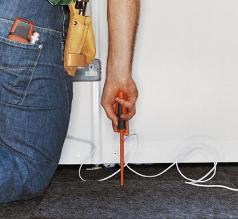
- laying, connecting and testing underground/underfloor cabling
- testing and repairing faults in public and private switching exchanges
- working with aerial rigging and related equipment
- installing mobile and static antennae on buildings or masts
- designing, building and testing telecommunications components
 | |  | |  |
 |  |  |  |  |  |


